1. Introduction
Research has shown many benefits to having therapy and reading dogs in school settings. Holton Sleaford Independent School (“Holton”) would like to have a school dog who works with our pupils and staff to improve pupils’ behaviour and wellbeing. This policy is designed to set out to pupils, parents, and visitors the reasons for having a school dog at Holton (Section 2: The benefits of a school dog) and the rules and responsibilities to ensure the safety of pupils, staff, visitors, and the school dog (Sections 3 and 4: Principles and Code of conduct). Although there is a risk in bringing a dog into a school environment, this can be mitigated against with a robust risk assessment to ensure the safety of all pupils, staff, and visitors (Appendix A: School dog risk assessment).
2. The benefits of a school dog
School dogs have been proven to help develop children’s reading skills, improve behaviour, attendance, and academic confidence, as well as increasing children’s understanding of responsibility and developing empathy and nurturing skills. At Holton, we have a school dog to support our staff team in bringing all of these benefits to our pupils. Holton’s school dog will be trained as a therapy dog and certified by The Dog Mentor.
2.1 Literacy benefits
“Reading to dogs has been proven to help children develop literacy skills and build confidence, through both the calming effect the dog’s presence has on children and the fact that the dog will listen to the children read without being judgemental or critical. This comforting environment helps to nurture children’s enthusiasm for reading and provides them with the confidence needed to read aloud. When dogs are in a room of children trying to read they become less stressed, less self-conscious and more confident because dogs are non-judgemental. If children are partnered with a dog to read to, the dog provides comfort, encourages positive social behaviour, enhances self-esteem, motivates speech and inspires children to have fun and enjoy the experience of reading.”
— Bark & Read, The Kennel Club (www.thekennelclub.org.uk/barkandread)
“Children who read to dogs are less likely to be embarrassed reading aloud and find the experience less stressful. Research has proved that children who read to dogs show an increase in reading levels, word recognition, and a higher desire to read and write.”
— School Dog Policy, The White Horse Federation
2.2 Therapy benefits
“Therapy Dogs Nationwide dogs have also shown to help with special needs and autistic children and adults by giving focus and providing a calming environment.”
— School Dogs, Therapy Dogs Nationwide (www.tdn.org.uk/schools/)
2.3 Attendance and punctuality benefits
“Mandy was a child with poor attendance and truancy. Mandy was encouraged back into school using caring for River, a dog, as an incentive. By telling Mandy that ‘if she didn’t come to school to care for him, he wouldn’t get walks, water or love,’ Mandy came to school almost every day for the rest of the year, only missing two days.”
— Case Study, Hazel Oak School Dog Policy
2.4 Behaviour and rewards
“Researchers report that children can identify with animals, and with empathy for the dog, can better understand how classmates may feel. It was found that violent behaviour in participating children declined by 55%, and general aggression went down 62%. Behaviour problems occur in school and these can interfere with learning. Some schools are using dogs to improve behaviour problems by promoting positive behaviour in children. In a controlled study, children were found to have fewer disciplinary referrals in schools with a dog than in schools without. Children’s behaviour improved toward teachers, and children also showed more confidence and responsibility. Additionally, parents reported that children seemed more interested in school as a result of having a dog at school.”
— Hazel Oak School Dog Policy
3. Principles
- The Executive Headteacher (Daniel Laughton) and Therapy Lead (Stevi Pullen) both agree to a school dog (“Marley”) working in the school.
- Only the school dog (“Marley”) is allowed on the premises. All other dogs must not come on site unless they are a known therapy or assistance dog and have approved their presence prior to the visit.
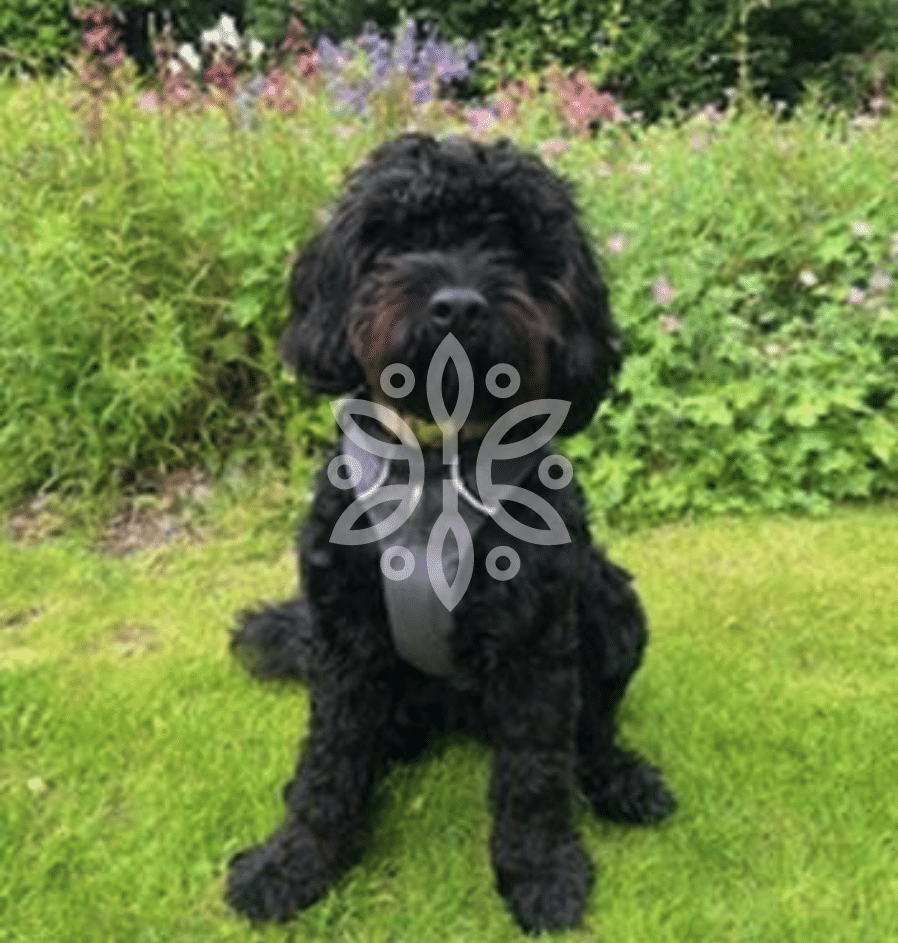
- Marley is an F1 Cockapoo chosen because it is an intelligent breed that will respond well to training, is known to be good with children, sheds little hair (hypoallergenic), and is very sociable and friendly.
- Marley’s legal owner is Mrs Stevi Pullen; she has full responsibility for the welfare of the school dog.
- Mrs Pullen, the legal owner of the school dog, has produced a risk assessment which has been approved by the Governors and will be reviewed annually.
- The dog will be included in the fire evacuation procedure under the supervision of Mrs Pullen or other trained staff members.
- The school’s liability insurance covers the school for risks related to a working dog on site. The Bursar has responsibility for ensuring this remains on the school’s policy during Marley’s time working at Holton.
- Staff, parents, and children will be informed in writing that a dog will be in school.
- The presence of a school dog will be signposted to visitors at reception and on the school website. The reception staff will relay visitor issues to the Headteacher as soon as possible.
- Only staff trained to handle the dog in children’s sessions will have permission to do so.
4. Code of conduct
4.1 Staff responsibilities
- Mrs Pullen will know the whereabouts of the dog and which staff are supervising at all times.
- If the dog is ill he will not be allowed into school. Mrs Pullen has responsibility for ensuring appropriate alternative care for Marley if he is not able to be in the school on a given day.
- Mrs Pullen is responsible for ensuring Marley is trained and certified as a therapy dog by The Dog Mentor.
- Marley must be kept on a lead when moving between classrooms or on a walk and will be under the full control and supervision of a member of staff.
- Marley will be kept in the Main Office or Mrs Pullen’s office when not interacting with children for therapy, reading sessions, and other school activities.
- Staff, visitors, and children known to have allergic reactions to dogs must not go near Marley. The School Office keeps a list of all children and staff with a reported allergy to dogs and ensures that all trained handlers for Marley know who these children and staff are.
- Staff leading sessions with Marley have a responsibility to ensure all staff, children, or visitors present are happy for Marley to enter the room.
- Children must never be left alone with Marley and there must be appropriate adult supervision at all times.
- Children will be reminded of what is appropriate behaviour around the dog before any interaction during sessions or visits.
- If the dog is surrounded by a large number of children, the dog could become nervous and agitated. Therefore, the adult in charge of the dog must ensure that s/he monitors the situation. If the dog is displaying any warning signs such as growling or flattening of his ears, he should be immediately removed from that particular situation or environment by the trained staff member handling him.
- Any dog foul should be cleaned immediately and disposed of appropriately by the trained dog handling staff only.
- Holton’s staff will maintain records and anecdotal evidence of the work and impact of the school dog to better inform research into the benefits of a school therapy/reading dog.
4.2 Children responsibilities
- Children whose parents have withdrawn consent are not allowed to attend dog therapy sessions.
- Children should be careful to stroke Marley on the body, chest, or back, and not by the face or top of the head.
- Children are not allowed to approach Marley or disturb him whilst he is sleeping or eating.
- Children are not allowed to play roughly with the dog.
- Children must wait until the school dog is sitting or lying down before touching or stroking him.
- Children are not allowed to eat during sessions with Marley.
- Children must always wash their hands after handling or stroking Marley.
- Children understand that any deliberate violence or threatening behaviour towards Marley will result in removal and no direct contact with him.
5. The school dog – Marley
Appendix A: School dog risk assessment
| Hazard Identified | Persons at Risk | Risk Level | Existing Control Measures |
|---|---|---|---|
| Animal behaviour Staff, pupils, or visitors could be injured if the school dog is not comfortable in a specific school environment and reacts badly, including bites or scratches. |
Children, Staff, Visitors | Medium |
|
| Disease, illness, and allergic reactions Staff, pupils, or visitors could suffer ill health if they come into contact with animal faeces or urine or have an allergy to dogs. |
Children (Medium), Staff (Medium), Visitors (Low) | Medium / Low |
|
| Animal phobias Staff or children could suffer distress themselves or distress the school dog if they become scared or upset around the school dog. |
Children (Medium), Staff (Low), Visitors (Low) | Medium / Low |
|
| School emergency evacuation (including drills) The dog could become distressed by the evacuation and behave in an unexpected way (e.g. become defensive or try to escape). |
Children (Medium), Staff (Medium), Visitors (Low) | Medium / Low |
|
| A claim is made against the school A parent or visitor could make a claim against the school relating to the behaviour of the dog. |
Children (Low), Staff (High), Visitors (Medium) | Variable |
|
Appendix B: School dog frequently asked questions (FAQs)
Q: Who is the legal owner of the dog and who pays for its costs?
A: The legal owner of the dog is Mrs Pullen. She bears the costs associated with owning the dog; the school budget will support liability insurance and staff training costs only where appropriate.
Q: Is the dog from a reputable breeder?
A: Yes. The dog is from a home where both parents were seen and has been specifically chosen for its temperament.
Q: Will the dog be a distraction to children’s learning?
A: The dog will be kept in the Therapy Room. The dog will only spend time in classrooms and other spaces where children can interact safely outside of lesson times and therefore the dog will not be a distraction to children during lessons. The dog will also attend meetings with staff to support further socialisation, following consultation with staff beforehand.
Q: Has a risk assessment been undertaken?
A: Yes, we have carefully considered having a dog in school and sought advice from many sources, including other schools that successfully have a school dog.
Q: Who is responsible for training?
A: Mrs Pullen is the legal owner of the dog and the school will fund appropriate professional training. The dog will work towards being trained as a school dog in training classes with advice from The Dog Mentor, paid for by the school. The school will have the dog assessed and certified as a therapy dog by The Dog Mentor.
Q: How will the dog be toileted to ensure hygiene for all?
A: In the interest of health and hygiene, our school dog will be toileted when taken out for short walks outside the school by staff members.
Q: What if my child is scared of dogs? Will they be forced to be in the same room as the dog?
A: The dog will be kept in the Therapy Room. The office is separate from the classrooms/playground area which will ensure the school dog only comes into contact with children who are happy to have contact and have parental permission for this, under strict supervision of a trained member of staff. Children will not be forced to be in contact with the dog at any time against their wishes. We hope to work closely with parents of children who are fearful of dogs to alleviate their fear and to teach them how to manage this.
Q: How will the dog’s welfare be considered?
A: The dog will be walked regularly and given free time outside. Parents will be made aware that their child may walk the dog with a member of staff; this will also be used as a behaviour reward. The dog will be kept in the Therapy Room and reception area with its legal owner, Mrs Pullen, and will only have planned and supervised contact with children and visitors. The dog will be carefully trained over a period of time and will have appropriate access to food and water. We will work carefully to ensure the dog’s welfare is always considered.
Q: How will this be managed where children have allergies?
A: Children will not need to touch the dog or be in the same room as the dog at any point, which relieves the possibility of allergic reactions. We already manage a number of allergies at school and this will be no different for children and adults that are allergic to dogs. Individual needs will always be met and we are happy to work with parents to put additional control measures in place for individual allergies. The school dog was specifically chosen for being a breed known for sociable dispositions and minimal moulting; he will be given high-quality food and regularly groomed to reduce any possibility of allergens.
Appendix C: Advice on school dogs
- The Dogs Trust – School Dogs: www.dogstrust.org.uk/help-advice/factsheets-downloads/school dogs.pdf
- The Kennel Club – Bark and Read: www.thekennelclub.org.uk/barkandread
- BBC News – “Every school ‘needs dog as stress-buster’”: www.bbc.co.uk/news/education-47655600